Project Information
- Category: Creating a unified database
- Client: Mersal Charity
- Duration: 10 months
- Team: 1 Project Manager, 1 Data Analyst,6 Data Entry Specialists
- Tools & Technologies: Excel & Google Sheet, SQL, Power BI
- Project Link: View Project
This page presents a high-level overview of the project. Due to data privacy, confidentiality policies, and the protection of Mersal Charity’s information, full project details and actual dashboard visuals cannot be publicly shared.
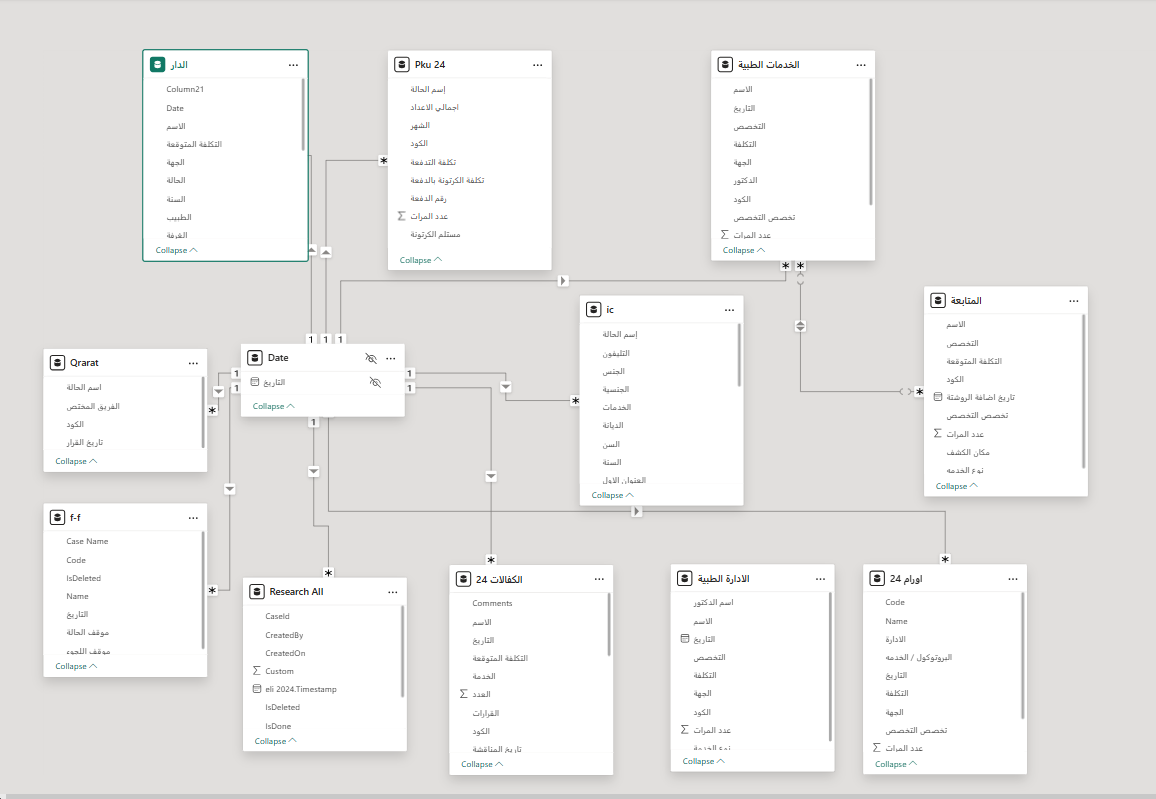

Project Overview
The project was designed to not only consolidate over 10 years of historical files for Mersal Charity but also to create a comprehensive, unified database that enables generating reports in real-time and in any required format. By linking files across all departments, the database allows for instant cross-referencing, data-driven insights, and seamless operational monitoring. This integration ensures that information from different divisions, including operational logs, medical services, social services, can be accessed and analyzed cohesively.
The work included organizing files into standardized templates, cleaning duplicates and errors, completing missing data, and resolving inconsistencies. Each file was meticulously reviewed against system logs and official approvals.
Special acknowledgment goes to Mr. Mamdouh Yassin, the Director of the Information Center, whose guidance and oversight were instrumental in aligning the project with the charity’s operational and strategic objectives. The combined effort of leadership and the data entry team was crucial to overcome the complexities of long-term data consolidation, enabling Mersal Charity to now rely on a unified, high-quality database for reporting, analysis, and decision-making.
Files by Department
- Follow-up: Medical Procedures, Medical Supplies, Physical Therapy & Speech Therapy, Dialysis Sessions, Emergency Booking Cases, Surgical Procedures, Emergency Medical Services, Medical Tests, Medical Examinations, Medications
- Medical Services: Neonatal Care Units (Nurseries), Outpatient Clinics, Ambulance Services, Nursing & Home Healthcare Services, Nursing Home Visits, Home-Based Physical Therapy, Physical Therapy Services, Speech Therapy Services
- Oncology Department: Oncology Services
- Social Care Department: Social unrest, PKU, Guest House & Patient Accommodation
- Medical Administration: Psychiatric Medications, Genetic Therapy, Psychiatric Treatment Sessions, Medical Facility & Clinic Booking, National Oncology Institute Coordination, Pre-Medical Tests & Diagnostic Offers, Medical Case Classification
- Special & Strategic Files: Family Support & Case Formation, Financial Budget Files, Official Approvals, Executive & Medical Decisions
Project Team
The success of this project relied heavily on a dedicated team of data entry specialists, consisting of six skilled professionals who worked consistently over the course of the project. Their meticulous attention to detail and commitment to accuracy ensured that all files were properly cleaned, standardized, and integrated into the new system.
- Project Manager: Mr. Mamdouh Yassin
- Data Analyst: Omar Essa
- Coordinator: Khloud Abdelhameed
- Data Entry: Abdulrahman Nader
- Data Entry: Shaimaa Magdy
- Data Entry: Omar Abdelaziz
- Data Entry: Nadia Diab
- Data Entry: Sajdaa Abdelnasser
- Data Entry: Amina Wageeh
- Data analysis trainee: Omar Shoman
- Data analysis trainee: Ziad Taha
- Data analysis trainee: Nada Abdelnaser
Skills & Tools
Microsoft Excel (Advanced)
Advanced formulas, Pivot Tables, Power Query, large datasets handling
Power BI
Interactive dashboards, DAX basics, data modeling, reporting
Google Sheets
Long-term data tracking, collaboration, dynamic formulas
SQL (Basic)
Data extraction, filtering, joins, preparing datasets for analysis
Python (Pandas & NumPy)
Data cleaning, transformation, exploratory analysis
Data Modeling
Structuring datasets, relationships, preparing data for BI tools
Data Cleaning & Validation
Handling missing data, duplicates, inconsistencies
Exploratory Data Analysis (EDA)
Identifying trends, patterns, and insights
Reporting & Insights
Turning data into clear, actionable business insights
Recommendations
- Establish a centralized and unified database to ensure consistent data access across all departments and services.
- Use the centralized database for analytical reporting and strategic decision-making.
- Standardize data entry templates and reporting formats to reduce inconsistencies and improve data quality.
- Implement clear data governance policies to define ownership, validation rules, and approval workflows.
- Automate recurring reports to reduce manual effort and ensure timely availability of insights.
- Strengthen data validation processes at the point of data entry to minimize errors and missing values.
- Maintain regular data audits to ensure long-term accuracy, traceability, and compliance.
- Enhance integration between operational systems and analytical platforms to enable real-time or near real-time reporting.
- Develop role-based dashboards tailored to management, medical teams, and operational staff.
- Invest in continuous training for staff involved in data entry and reporting to ensure consistency and accuracy.
- Document all data sources, definitions, and business rules to create a reliable data dictionary.
- Encourage cross-department collaboration to improve data completeness and reduce information silos.
- Leverage historical data to support strategic planning, forecasting, and trend analysis.
- Implement backup and version control mechanisms to protect historical and critical datasets.
- Ensure data privacy and security standards are consistently applied across all systems and reports.
- Align analytical outputs with organizational goals to maximize business and healthcare impact.
- Continuously refine dashboards based on stakeholder feedback to improve usability and relevance.
10 Years
Historical Data Management